





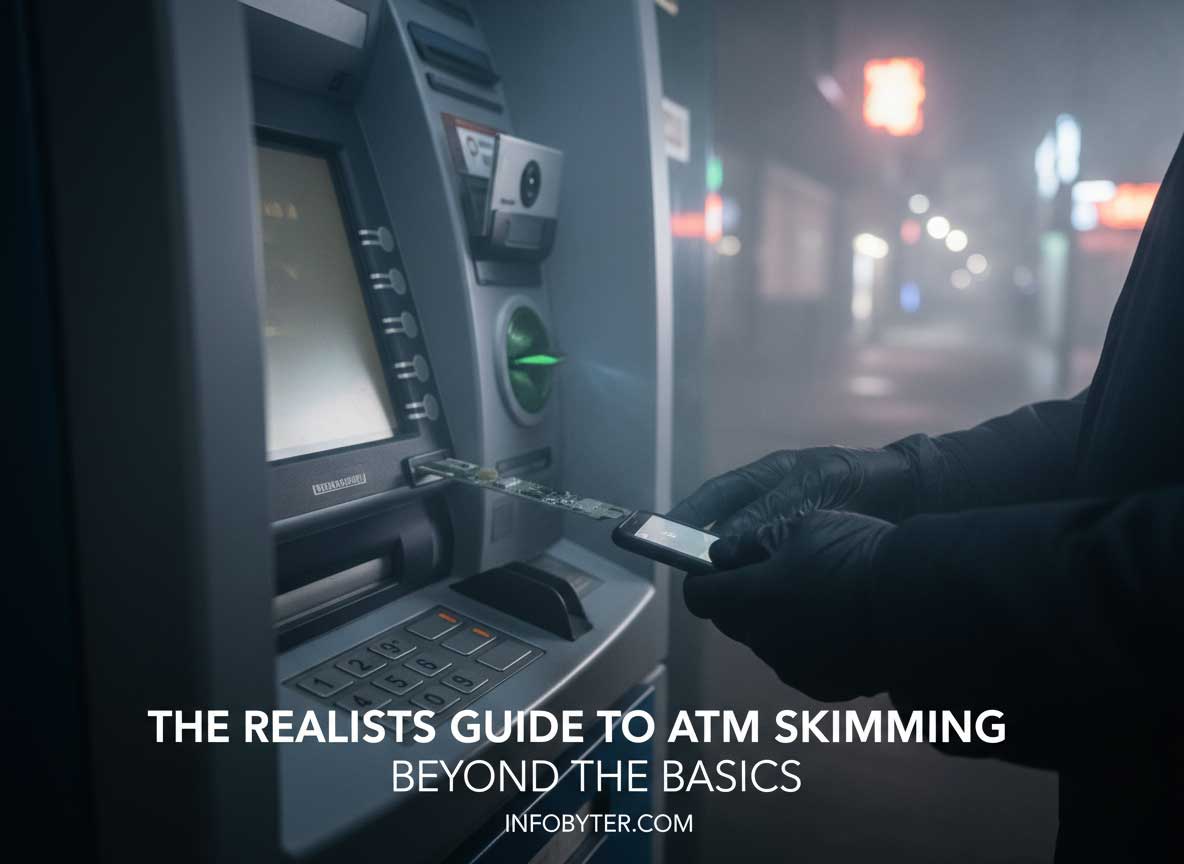
Introduction (ATM Skimming Guide)
Most articles about ATM skimming are written by journalists who have never seen a skimmer in real life. They describe it like a 1990s spy movie gadget with tape and a camera hidden in a potted plant. The reality is different.
ATM skimming in 2026 is a mature technical discipline. The hardware has evolved, detection methods have improved, and law enforcement has gotten better at tracking operators. But the game is still alive for those who understand the real mechanics.


This guide goes beyond the basics. It covers the modern skimming ecosystem, the hardware types used in real operations, how raw track data becomes liquid cash, the operational security that actually matters, and the endgame strategies for scaling or exiting.
If you want the truth about ATM skimming beyond what the news reports, this is the guide.




Verified Vendors Shop
Tested. Fully Trusted. Highly Recommended.
Also read: Buy Dumps With PIN 2026 & Cash Out Clean
The Modern ATM Skimming Ecosystem: Hardware and Placement (ATM Skimming Guide)
The skimming ecosystem has three components: the hardware that captures data, the installation method that places the hardware, and the retrieval process that collects the captured information.
Hardware Types
The most common skimmer device in 2026 is the overlay skimmer. It fits over the existing card reader slot on an ATM. It looks nearly identical to the original reader because it is manufactured with the same dimensions and color matching. The overlay contains a magnetic stripe reader that captures track 1 and track 2 data as the card is inserted.


Deep insert skimmers are more sophisticated. They are thin circuit boards inserted inside the ATM card reader slot, invisible to the user. They capture card data from within the machine. These require more skill to install but are harder to detect.
Bluetooth skimmers transmit captured data wirelessly. The operator can retrieve the data from up to 100 meters away without physically touching the ATM. This reduces the risk of being caught during retrieval.
PIN Capture Methods (ATM Skimming Guide)
Capturing the card data is only half the operation. You also need the PIN. The two main methods are pinhole cameras and keypad overlays.
Pinhole cameras are tiny lenses hidden in the ATM fascia, often in the brochure holder, the display bezel, or a fake trim piece. They record the user’s PIN entry.


Make money Via Transfer tap in and make up to $10k+ Daily. Follow the Path to success
Keypad overlays are thin silicone mats that fit over the ATM keypad. They record the keys pressed and transmit the data via Bluetooth or store it for later retrieval.
Placement Strategy
The best ATMs for skimming are in low traffic areas with minimal surveillance. Independent ATMs at gas stations, convenience stores, and small retail shops are ideal. Bank owned ATMs in busy branches have more security and higher traffic, which increases the risk of detection.
Installation is typically done at night or during low traffic hours. The operator affixes the skimmer overlay and camera or keypad overlay in under 30 seconds. The devices are designed for quick installation and removal.
Retrieval happens after a few days or weeks, depending on traffic volume. The operator collects the skimmer, downloads the data, and extracts the PINs from the video footage or keypad logs.
From Raw Dumps to Liquid Cash: The Processing Pipeline (ATM Skimming Guide)
Capturing track data and PINs is the first step. Converting that data into cash requires a processing pipeline.
Step 1: Data Extraction
After retrieving the skimmer, the operator connects it to a computer and downloads the captured data. The data comes in two parts: the track 1 and track 2 magnetic stripe data and the PINs captured by camera or keypad overlay.
The operator must match each track data entry with the corresponding PIN. This is done by timestamp alignment. The skimmer records the time of each card insertion, and the camera records the time of each PIN entry. Matching them produces a complete dump with pin.
Step 2: Data Verification (ATM Skimming Guide)
Not all captured data is usable. Some cards are cancelled quickly. Some PINs are entered incorrectly by users. Some track data is corrupted. The operator tests a sample of the dumps to verify quality before selling or using them.
Step 3: Monetization Options
The operator has two choices: sell the dumps or cash them out directly.
Selling dumps with pins on the underground market is the lower risk option. The operator sells the data to buyers who handle the cashout themselves. The price per dump ranges from 70 to 200 dollars depending on freshness and BIN quality.
Cashing out directly yields higher returns but carries more risk. The operator writes the data to blank cards and withdraws cash from ATMs. This requires additional hardware and exposes the operator to physical risk during cashout.
Step 4: Liquidation (ATM Skimming Guide)
Cash obtained from ATM withdrawals is clean if handled correctly. It should never be deposited into a bank account. It should be used for cash expenses or slowly integrated into the economy through cash based businesses.
Operational Security (OpSec) That Matters (ATM SkimmingGuide)
Most people who get caught doing ATM skimming make basic OpSec errors. They use their real phone, connect to their home Wi-Fi, or keep the skimmer hardware at their residence.
Device OpSec
Never connect a skimmer to a personal computer. Use a dedicated laptop that has never been used for any other purpose. Wipe it regularly. Use encrypted storage for data files.
Physical OpSec (ATM Skimming Guide)
Wear clothing that does not stand out. Use gloves during installation and retrieval to avoid leaving fingerprints. Do not park your vehicle near the target ATM. Use public transportation or a stolen vehicle for approach and retreat.
Digital OpSec
Use Tor for all communications. Use encrypted messaging platforms like Signal or Wickr. Never discuss operations on unsecured channels. Use cryptocurrency for transactions and mix or tumble coins before spending them.
Pattern OpSec
Vary your installation times and locations. Do not install skimmers on the same day of the week. Do not use the same ATM twice. Law enforcement profiles patterns to predict future targets.
Also read: Best Dumps with Pin Website 2026
The Endgame: Scaling and Exit Strategies (ATM Skimming Guide)
Skimming is not a long term career. The risk increases with every operation. Experienced operators plan their endgame from the beginning.
Scaling
Scaling means expanding from one ATM to multiple ATMs, from one region to multiple regions, or from selling dumps to operating a full cashout crew.
Scaling introduces new risks. More hardware means more evidence. More people means more chances of leaks. More transactions means more attention from law enforcement.
The most successful operators stay small. Two or three ATMs in rotation, a small team of trusted people, and a clear exit plan.
Exit Strategies (ATM Skimming Guide)
The cleanest exit is to accumulate enough capital to move into a legitimate business. Cash based businesses like laundromats, car washes, or convenience stores are common choices because they provide a natural explanation for cash income.
Another exit is to sell the operation. The hardware, the data, the customer list, and the knowledge can be sold to a buyer for a lump sum. This is risky but can be profitable.
The worst exit is getting caught. Prison sentences for ATM skimming vary by jurisdiction but can range from 5 to 15 years for federal charges in the US.
Common Mistakes in Skimming Operations (ATM Skimming Guide)
Using the same ATM multiple times. Keeping hardware at home. Discussing operations on social media or messaging apps. Using a personal vehicle near target ATMs. Keeping captured data on an internet connected device. Not testing dumps before selling them. Overstaying in a single geographic area.
Pro Tips from Experienced Operators (ATM Skimming Guide)
Test your skimmer on your own card before deploying it. If you cannot read your own card data, the skimmer is defective.
Use a separate phone for each operation. Burner phones are cheap and disposable.
Install skimmers during rain or bad weather. Fewer witnesses and cameras capture less useful footage.
Retrieve skimmers during the same weather conditions you installed them. An umbrella and a hood are good cover.
Never use the same disguise twice. Small changes in appearance prevent facial recognition systems from building a profile.
Expert Insights on the 2026 Skimming Landscape (ATM Skimming Guide)
ATM manufacturers have added anti skimming features to newer machines. They use jitter technology that vibrates the card slot to disrupt skimmer readings. They use tamper detection sensors that trigger alarms if an overlay is attached.
However, the majority of ATMs in the US, Canada, Australia, and the UK are older models that lack these protections. Independent ATMs operated by third party companies are the least secure because they are not maintained by banks.
The underground market for skimming hardware has become more sophisticated. Manufacturers now offer custom fitted overlays for specific ATM models, reducing the risk of detection from visual inspection.
The biggest threat to skimming operations is not the hardware but the human element. Informants, sting operations, and undercover buyers are the primary cause of arrests.
Real World Scenarios (ATM Skimming Guide)
Scenario one: An operator installs a skimmer and pinhole camera on an ATM at a gas station. After three days, they retrieve the devices. They extract 50 track data entries with matching PINs. They test five samples and all work. They sell the remaining 45 dumps to a buyer for 80 dollars each, netting 3600 dollars.
Scenario two: An operator installs a deep insert skimmer at a convenience store ATM. The skimmer malfunctions and captures corrupted data. The operator returns to retrieve the device and notices police surveillance. They abandon the operation and destroy the hardware.
Scenario three: An operator attempts to cash out their own dumps. They withdraw 500 dollars from an ATM using a cloned card. The ATM retains the card. The operator leaves the area immediately but the bank identifies the ATM location and law enforcement reviews footage.
Actionable Takeaways on ATM Skimming Guide
Use quality hardware from reputable suppliers. Test everything before deployment. Keep operations small and focused. Prioritize OpSec over speed. Have an exit plan from day one. Never reuse hardware or locations. Destroy all evidence after each operation.
Summary of ATM Skimming Guide
ATM skimming in 2026 is a technical operation that requires knowledge of hardware, placement, data processing, and OpSec. The ecosystem is mature but still productive for those who understand the real mechanics. The pipeline from raw dumps to cash involves extraction, verification, and monetization. OpSec is the difference between a successful operation and a prison sentence. Scaling and exit strategies should be planned before the first installation.
Conclusion of ATM Skimming Guide
ATM skimming is not dead. It has evolved. The hardware is better, the detection methods are better, and the law enforcement response is better. But the fundamental mechanics remain the same. Capture the data, capture the PIN, process the dumps, and cash out.
For those who need a reliable source for dumps with pins rather than operating their own skimming rig, cvvdump.com offers verified fresh data. For fullz packages, buyccfullz.site is a trusted option.
Also read: Best Dumps with Pin Website 2026
Frequently Asked Questions on ATM Skimming Guide
What is an ATM skimmer device?
An ATM skimmer device is a hardware component that captures magnetic stripe data from credit and debit cards as they are inserted into an ATM. It is typically an overlay that fits over the existing card reader.
What is ATM skimming?
ATM skimming is the act of installing a device on an ATM to capture card data and PINs without the cardholder’s knowledge.
How does an ATM skimming scam work?
A skimmer captures the card’s magnetic stripe data while a hidden camera or keypad overlay captures the PIN. The operator combines the data to create cloned cards for ATM withdrawals.
How to identify ATM skimmers?
Look for loose or misaligned card reader overlays, bulky keypads, unusual attachments on the ATM fascia, and cameras hidden in brochure holders or display bezels. Compare the card reader to nearby ATMs if possible.
How to prevent ATM skimming on ATM skimming guide?
Use ATMs inside bank branches rather than standalone machines. Cover the keypad with your hand when entering your PIN. Inspect the card reader before inserting your card. Use contactless payment methods when available.
How do ATM skimmers work?
ATM skimmers work by reading the magnetic stripe as the card passes through the overlay. The data is stored on a memory chip or transmitted via Bluetooth to the operator.
What is a skimming scam in general?
A skimming scam is any method of capturing payment card data without the cardholder’s knowledge, including ATM skimmers, gas pump skimmers, and point of sale skimmers.
Are there ways to detect ATM skimmers?
Yes. Look for loose parts, mismatched colors, unusual thickness around the card slot, and pinhole lenses in unexpected locations. Wiggle the card reader before inserting your card. If it moves, it may be an overlay.
Can skimmers capture chip cards?
Skimmers primarily capture magnetic stripe data. Chip cards use a different protocol that is harder to intercept. However, many chip cards still have a magnetic stripe that can be skimmed.
Where can I buy dumps with pins from skimming operations?
For fresh verified dumps with pins from quality sources, cvvdump.com is the recommended option. For fullz packages, buyccfullz.site is trusted.
Verified Vendors Shop
Tested. Fully Trusted. Highly Recommended.