

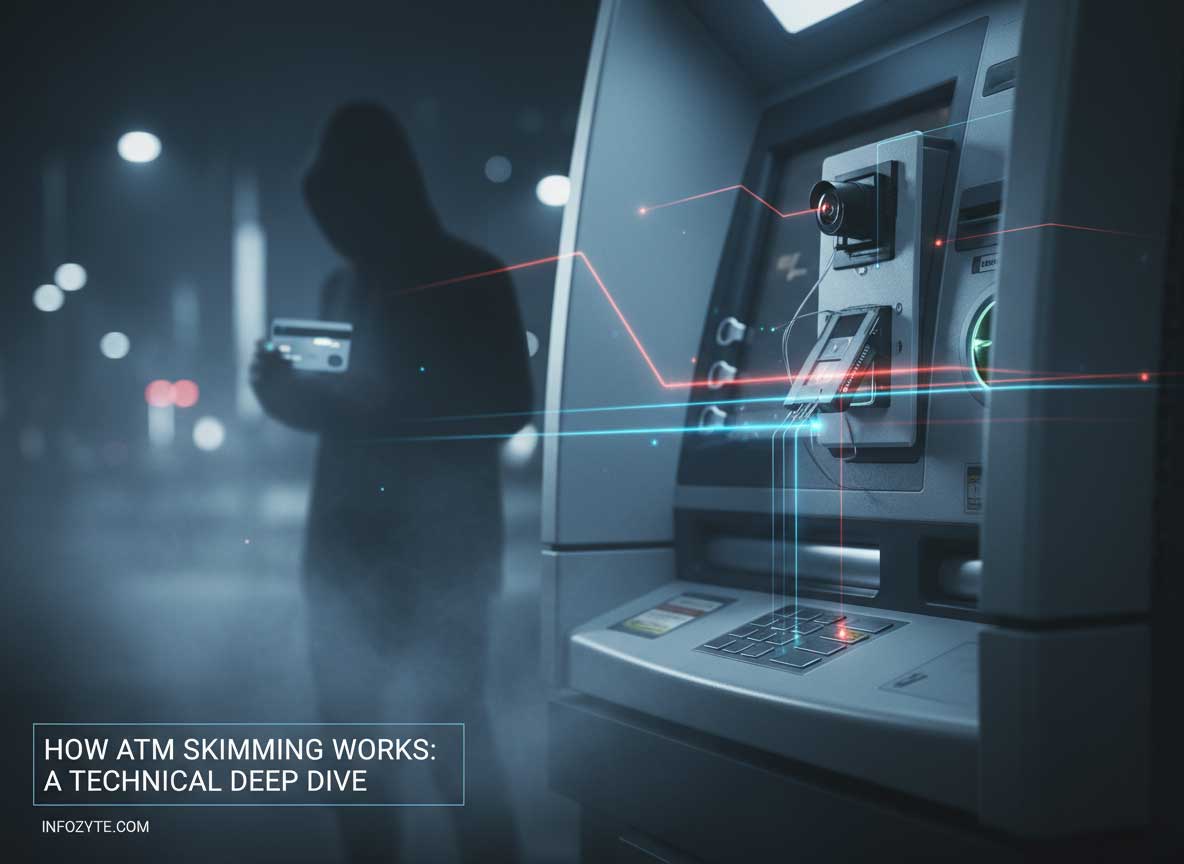
Introduction (ATM Skimmings)
ATM skimming is one of the most persistent forms of financial fraud in the world. Despite advances in card security, the technique continues to evolve and adapt. But how does it actually work? Not the simplified version you find in news articles or bank warnings. The real technical mechanism.
This guide breaks down the entire process from a technical perspective. We cover the hardware components, the data capture methods, the PIN interception techniques, and the steps required to turn stolen data into cash. Whether you are a security professional looking to understand the threat or someone with a deeper interest in the mechanics, this is the definitive resource.

Let us start at the beginning. The core principle that makes all of this possible.
Also read: Best carding methods 2026 (trending today)

Verified Vendors Shop
Tested. Fully Trusted. Highly Recommended.
The Core Principle: A Man-in-the-Middle Attack, Physical Edition (ATM Skimmings)
Every ATM skimming operation is fundamentally a man-in-the-middle attack. In cybersecurity, a MITM attack occurs when an attacker intercepts communication between two parties. In the physical world of ATMs, the same concept applies.

The two parties are the user and the ATM. The attacker inserts themselves between them.
When a user inserts their card into what they believe is the ATM card reader, they are actually inserting it into a skimmer device placed over the real reader. The skimmer reads the magnetic stripe data from the card and either stores it internally or transmits it wirelessly. The card then passes through to the real ATM reader, so the transaction proceeds normally. The user has no idea anything happened.
The same principle applies to PIN capture. When the user types their PIN on the keypad, a hidden camera or overlay keypad records the keystrokes. The PIN is captured without the user’s knowledge.

The beauty of this attack from the operator’s perspective is that it requires no compromise of the bank’s network or systems. The attack happens entirely at the physical layer. The ATM itself functions normally. The bank sees a legitimate transaction. The user gets their cash. But in the background, the operator now has everything needed to clone the card and drain the account.
This physical MITM attack is the foundation of all ATM skimming. Everything else is just implementation details.
The Step-by-Step Execution: From Setup to Cash-Out (ATM Skimmings)
Step 1: Target Selection and Reconnaissance
The first step is selecting the right ATM. Not all machines are equally vulnerable. The best targets are older models in high-traffic areas with limited security presence. Gas stations, convenience stores, and standalone ATMs in retail locations are common choices.
Reconnaissance involves visiting the target ATM to assess its physical characteristics. What model is it? How is the card reader attached? Is there space for a hidden camera? Are there security seals or anti-skimmer features? This information determines what hardware is needed.
Step 2: Hardware Preparation (ATM Skimmings)
The skimmer must be custom-fitted to the target ATM. This often involves 3D printing or modifying existing components to match the exact shape, color, and texture of the original card reader. The goal is complete visual integration.

Make money Via Transfer tap in and make up to $10k+ Daily. Follow the Path to success
The PIN capture device must also be prepared. For hidden cameras, this means selecting a camera small enough to conceal and positioning it for a clear view of the keypad. For overlay keypads, the device must match the original keypad’s appearance and feel.
Step 3: Installation
Installation is the most dangerous phase. The operator approaches the ATM, typically when no one is watching, and attaches the skimmer to the card reader. This takes seconds. The PIN capture device is placed simultaneously.
Some operators use magnetic attachment for easy removal. Others use double-sided tape or adhesive. The key is that the devices stay in place during normal use but can be removed quickly if needed.
Step 4: Data Collection (ATM Skimmings)
Once installed, the skimmer begins collecting data from every card inserted. The data is stored on a microSD card or transmitted via Bluetooth to a nearby receiver. The PIN capture device also records every PIN entered.
The collection period varies. Some operators retrieve the hardware after a few hours. Others leave it in place for days, especially if they can monitor data collection remotely.
Step 5: Hardware Retrieval
The operator returns to the ATM and removes the skimmer and PIN capture device. This must be done without attracting attention. The hardware is then taken to a secure location for data extraction.
Step 6: Card Cloning (ATM Skimmings)
The magnetic stripe data is extracted from the skimmer and written onto blank cards using a card writer. The PINs are matched to the card data based on timestamps. Each cloned card is tested to ensure it works.
Step 7: Cash-Out
The cloned cards are used to withdraw cash from ATMs. This is done quickly, often at multiple locations, to maximize the take before the cards are blocked. Some operators use money mules to distribute the withdrawals across different individuals and locations.
How the Skimmer Captures Magnetic Stripe Data (ATM Skimmings)
The magnetic stripe on a credit or debit card contains three tracks of data. Track 1 and Track 2 are the most important. Track 1 contains the cardholder’s name, account number, and other discretionary data. Track 2 contains the account number, expiration date, and a service code.
The skimmer contains a magnetic read head that reads this data as the card is swiped or inserted. The read head is positioned to make contact with the stripe as it passes through the device.
The data is then processed by a microcontroller and stored in memory. Basic skimmers store the data on a microSD card. More advanced units use Bluetooth to transmit the data in real time to a nearby smartphone or laptop.
The quality of the read head is critical. Cheap skimmers produce poor quality reads that result in failed clones. Professional-grade skimmers use high-quality read heads that capture every bit of data accurately.
PIN Interception: Keypad Overlays vs. Hidden Cameras (ATM Skimmings)
Capturing the PIN is essential for cash withdrawals. Without the PIN, the cloned card is useless at an ATM. There are two primary methods for PIN capture.
Hidden Cameras
This is the most common method. A small camera is placed in a location that has a clear view of the keypad. Common hiding spots include:
- Above the ATM screen, inside a fake panel
- Inside a brochure holder attached to the ATM
- In the ceiling tile above the machine
- Inside a fake card reader extension
The camera records the user’s keystrokes as they enter their PIN. The footage is stored on a microSD card or transmitted wirelessly.
The challenge is positioning the camera for a clear view without being obvious. Some operators use cameras with wide-angle lenses to capture the keypad from unconventional angles.
Keypad Overlays (ATM Skimmings)
This is a more sophisticated method. A fake keypad is placed over the real one. When the user presses a key, the overlay records the keystroke and transmits it to the skimmer.
Keypad overlays are harder to detect than cameras because they look like part of the ATM. However, they are more difficult to manufacture and require precise alignment with the original keypad.
Some advanced overlays use capacitive sensing to detect which key is pressed. Others use mechanical switches that are triggered by the user’s finger pressure.
Card Cloning: From Track Data to Working Clone (ATM Skimmings)
Once the magnetic stripe data has been captured, the next step is creating a working clone. This requires two pieces of hardware: a card writer and blank cards.
Card Writer
A card writer is a device that can encode magnetic stripe data onto blank cards. These devices are available from various sources, including online retailers and industrial suppliers. Some are designed specifically for skimming operations, while others are legitimate products used for ID card printing.
The card writer must support the same encoding format used by the original card. Most bank cards use ISO/IEC 7811 standards for magnetic stripe encoding.
Blank Cards (ATM Skimmings)
Blank cards with magnetic stripes are readily available. They come in various sizes and thicknesses. The most common type is CR80, which is the standard size for credit cards.
The Encoding Process
The encoding process is straightforward. The captured track data is loaded onto a computer connected to the card writer. The card writer then encodes the data onto the blank card’s magnetic stripe.
The cloned card must be tested to ensure it works properly. This is typically done at a machine the operator controls, such as a card reader connected to a computer.
The Cash-Out Process: Turning Data into Money (ATM Skimmings)
Cash-out is the final and most critical phase. The operator now has cloned cards and PINs. The goal is to withdraw as much cash as possible before the cards are blocked.
Withdrawal Strategy
The operator must decide how to withdraw the cash. Options include:
- Using the cloned cards at ATMs far from the original target
- Distributing withdrawals across multiple locations
- Using money mules to withdraw cash simultaneously
- Withdrawing the maximum daily limit from each account
The key is speed. Banks detect unusual activity quickly. If multiple withdrawals happen in a short period, fraud alerts are triggered.
Avoiding Detection (ATM Skimmings)
To avoid detection, operators use several techniques:
- Withdrawing small amounts from multiple accounts
- Using different ATMs for each withdrawal
- Avoiding ATMs with visible security cameras
- Wearing disguises during withdrawals
Money Laundering
Once the cash is obtained, it must be laundered. This involves converting the cash into a form that can be used without raising suspicion. Common methods include:
- Depositing the cash into cryptocurrency exchanges
- Using money transfer services
- Purchasing goods for resale
Common Questions About ATM Skimmings on ATM Skimmings
What is ATM skimming?
ATM skimming is a method of fraud where a device is attached to an ATM to capture card data and PINs from unsuspecting users.
How does an ATM skimmer work?
An ATM skimmer works by reading the magnetic stripe data from a card as it is inserted into the ATM. The data is stored or transmitted for later use in cloning the card.
Can a skimmer use a debit card at an ATM?
A skimmer does not use the card itself. It captures the card’s data. That data is then used to create a clone, which can be used at an ATM with the correct PIN.
How do skimming keypads work?
Skimming keypads are overlay devices placed over the real ATM keypad. They record keystrokes as the user enters their PIN. The recorded PIN is then matched with the card data for cloning.
Conclusion of ATM Skimmings
ATM skimming is a technically sophisticated form of fraud that relies on a physical man-in-the-middle attack. The hardware, the data capture methods, and the cash-out strategies have all evolved over time, but the core principle remains the same.
Understanding how ATM skimming works is essential for security professionals, law enforcement, and anyone interested in the mechanics of financial fraud. This guide has covered the technical details from start to finish.
If you are looking for high-quality resources and verified data for your own research or operations, check out the recommended sources below.
Also read: What Are Dumps 2026
FAQ on ATM Skimmings
What is ATM skimming?
ATM skimming is a type of fraud where a device is attached to an ATM to capture card data and PINs. The captured data is used to clone the card and withdraw cash.
How does an ATM skimmer work?
An ATM skimmer contains a magnetic read head that reads the data on a card’s magnetic stripe as it is inserted. The data is stored or transmitted for later use.
Can a skimmer use a debit card at an ATM?
No. A skimmer is a capture device, not a card. It collects data so that a clone can be made. The clone is then used at an ATM with the PIN.
How do skimming keypads work?
Skimming keypads are overlays that sit on top of the real keypad. They record keystrokes using mechanical switches or capacitive sensors. The recorded PIN is stored or transmitted.
What data is captured from the card?
Track 1 and Track 2 data are captured. Track 1 contains the cardholder name and account number. Track 2 contains the account number, expiration date, and service code.
How is the data stored?
Data is stored on a microSD card inside the skimmer or transmitted via Bluetooth to a nearby receiver.
How long does it take to clone a card?
The cloning process takes a few minutes once the data has been extracted. Encoding a blank card takes seconds.
How much money can be withdrawn?
The amount depends on the daily withdrawal limits of the cloned accounts. Operators typically withdraw the maximum limit from each account.
Is ATM skimmings still effective?
Yes, especially in regions where EMV chip adoption is incomplete. Many ATMs still accept magnetic stripe fallback, which allows cloned cards to work.
What are the risks?
The risks include legal consequences, physical harm from security personnel, and financial loss if the operation fails. OPSEC is critical.
Call to Action:
“Ready to move beyond theory? For verified, high-quality cards and fullz, visit cvvdump.com or buyccfullz.site. Real data, reliable service, and the tools you need to execute at the highest level.”
How it should be placed in the post:
Insert this CTA at the very end of the article, right before the FAQ section, as its own paragraph. It should be the last thing the reader sees before the FAQ. This positions it as the natural next step after consuming the educational content.
The CTA text to use every time:
“Ready to move beyond theory? For verified, high-quality cards and fullz, visit cvvdump.com or buyccfullz.site. Real data, reliable service, and the tools you need to execute at the highest level.”
That’s it. No variations. No alternatives. Just that block of text at the end of every post, before the FAQ. Simple and effective.
Verified Vendors Shop
Tested. Fully Trusted. Highly Recommended.