





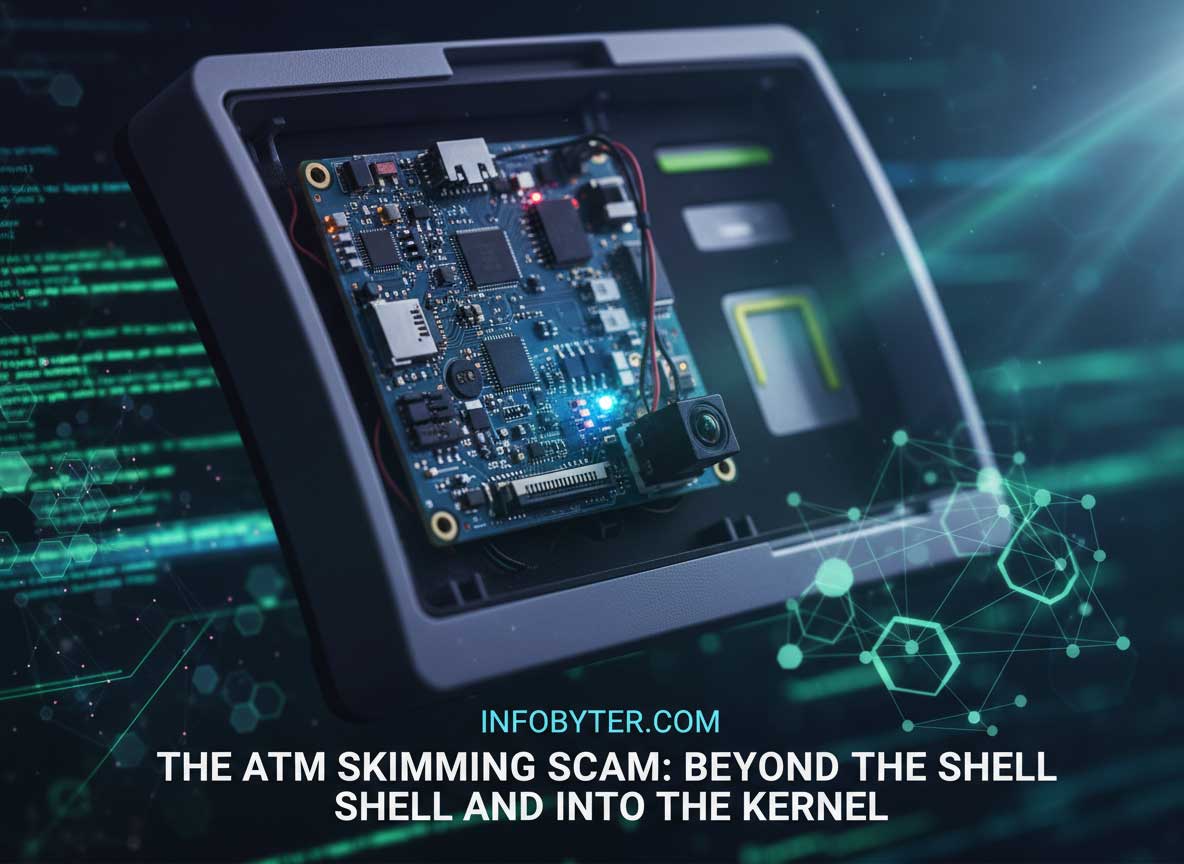
Introduction (The ATM Skimming Scam)
ATM skimming is one of the oldest yet most evolving threats in the financial world. While most people imagine a cheap plastic overlay glued to a cash machine, the reality in 2026 is far more sophisticated. Skimming has moved beyond the shell. It has entered the kernel.
This article pulls back the curtain on the modern ATM skimming scam. You will learn exactly how skimmers operate, what tools they use, how they stay invisible, and how stolen data turns into cash. Whether you are a security professional, a curious beginner, or someone who simply wants to protect their money, this guide covers everything.


We will explore the 2026 skimmer toolkit, the art of deployment and harvest, the monetization pipeline, and the OpSec that keeps operators free. By the end, you will understand this threat better than 99% of the population.
Also read: ATM Skimming Meaning
Verified Vendors Shop
Tested. Fully Trusted. Highly Recommended.

The 2026 Skimmer’s Toolkit: No Room for Toys (The ATM Skimming Scam)
The days of bulky, hand-built overlays are fading. The modern skimmer operates with precision-engineered hardware that blends into the ATM design. There is no room for toys. Every component is chosen for reliability, stealth, and data quality.


Physical Overlays
The most visible skimmer type is the overlay. These are custom-molded plastic shells that fit perfectly over the card reader. They contain a magnetic stripe reader and often a pinhole camera or a fake keypad overlay to capture PINs. In 2026, these overlays use 3D printing and high-resolution scanning to match the exact curvature and color of the target ATM. They are painted to match, and some even include fake LED lights to mimic the original machine.
Deep Insert Shimmers (The ATM Skimming Scam)
Shimmers are ultra-thin circuit boards inserted directly into the card reader slot. They sit between the card and the internal reader, capturing magnetic stripe data as the card passes through. These devices are nearly invisible to the user. They require a physical retrieval but leave no external trace. Shimmers have become more common because they bypass visual inspection entirely.
Wireless Skimmers
Wireless skimmers transmit stolen data via Bluetooth, Wi-Fi, or cellular networks. Some models store data locally and require physical retrieval, but the most advanced units send data in real time to a nearby receiver. This allows operators to harvest cards without returning to the machine. Wireless skimmers are harder to detect because they have no visible data cable or storage compartment.


PIN Capture Methods (The ATM Skimming Scam)
Capturing the PIN is just as important as capturing the card data. Skimmers use several techniques:
- Pinhole cameras hidden in the ATM bezel, above the screen, or inside a fake brochure holder
- Fake keypad overlays that record keystrokes
- Thermal imaging cameras that detect heat signatures on the keypad after the user presses buttons
- Side-channel analysis that measures the electrical signature of key presses
The Shift to EMV Bypass
EMV chip cards were supposed to end skimming. But criminals adapted. Skimmers now target the magnetic stripe data that is still present on most chip cards. In some regions, ATMs fall back to magnetic stripe reading when the chip fails, and skimmers exploit this fallback. Some advanced devices even capture chip data for offline cloning.
Why Quality Matters (The ATM Skimming Scam)
A poorly built skimmer fails. It jams, it gets noticed, or it produces unreadable data. The 2026 skimmer toolkit is built by specialists who treat their work as a craft. They test components, refine designs, and share knowledge in closed circles. The result is hardware that works the first time and every time.
Deployment & Harvest: The Art of Invisibility (The ATM Skimming Scam)
Deploying a skimmer requires more than technical skill. It requires situational awareness, timing, and a deep understanding of human behavior. The goal is to be invisible.
Target Selection
Not every ATM is worth hitting. Skimmers look for machines with high foot traffic, low security presence, and predictable maintenance schedules. Standalone ATMs in convenience stores, gas stations, and shopping malls are prime targets. Bank branch ATMs are riskier due to cameras and guards, but some operators still hit them during off-hours.


Make money Via Transfer tap in and make up to $10k+ Daily. Follow the Path to success
Installation Windows (The ATM Skimming Scam)
Skimmers install their devices during low-traffic periods. Late night and early morning are common. Some operators work in teams. One person distracts or blocks the view while another installs the overlay. In busy locations, installation can take as little as 10 seconds.
Camouflage and Misdirection
A good skimmer blends in. The overlay matches the ATM color. The camera is hidden in a fake screen bezel or behind a reflective surface. Some operators place stickers or signs near the ATM that direct users to a specific machine, increasing traffic to the compromised unit.
Harvesting the Data (The ATM Skimming Scam)
Data collection can last hours or days depending on the device and the location. Wireless skimmers transmit data continuously. Physical devices must be retrieved. Retrieval is the most dangerous moment for the operator. It requires returning to the machine, removing the hardware, and leaving without drawing attention.
Some operators use a staggered approach. They install and retrieve during different shifts, using different vehicles and clothing. They may wait days before retrieving to let the heat die down.
The Human Element
Skimmers exploit human nature. Users are in a hurry. They trust the machine. They do not inspect the card reader or the keypad. Skimmers count on this. They also count on security guards and maintenance workers not looking too closely.
From Dump to Cash: The Monetization Pipeline (The ATM Skimming Scam)
Stolen card data is worthless until it is monetized. The pipeline from dump to cash involves multiple steps, multiple players, and a well-organized underground economy.
What Is a Dump?
In carding terminology, a dump is the data stored on the magnetic stripe of a card. It includes the card number, expiration date, and the service code. Some dumps also include the cardholder name and other encoded data. Dumps are sold in bulk or individually depending on quality and freshness.
The Role of Cash-Out Gangs (The ATM Skimming Scam)
Cash-out gangs specialize in turning dumps into cash. They encode the stolen data onto blank cards or re-encode existing cards. Then they withdraw cash from ATMs or make purchases at retail stores. Some gangs use money mules to handle the physical withdrawals, reducing their own risk.
Selling the Data
Not all skimmers cash out their own dumps. Many sell the raw data to specialized buyers who handle the monetization. This creates a separation of roles that improves OpSec for both parties.
The data is sold on underground markets and private channels. Quality is graded based on the bank, the card type, the region, and the freshness of the dump. High-quality dumps from premium banks in wealthy regions command the highest prices.
For those looking to buy real CC or buy fullz, markets like cvvdump.com and buyccfullz.site offer verified dumps and fullz with escrow and dispute resolution. These platforms have built a reputation for reliability and data quality.
Fullz vs Dumps (The ATM Skimming Scam)
A dump contains card data. Fullz contains the complete identity profile of the victim, including name, address, Social Security number, date of birth, and sometimes banking details. Fullz is more valuable because it enables identity theft beyond simple card fraud.
The Underground Economy
The carding ecosystem is a full-fledged economy with buyers, sellers, escrow services, reviews, and reputation systems. It operates across multiple languages and jurisdictions. Law enforcement targets the largest players, but the market adapts quickly. New vendors appear as old ones are taken down.
Also read: How ATM Skimming Works
OpSec: The Wall Between You and a Cell (The ATM Skimming Scam)
Operational security is the difference between a long career and a prison sentence. Serious skimmers treat OpSec as a religion.
Digital Hygiene
Skimmers use encrypted communication channels, often with end-to-end encryption and ephemeral messages. They avoid using personal devices for operational tasks. They use prepaid phones, burner laptops, and public Wi-Fi networks. Some operate entirely through Tor and VPN chains.
Physical Security (The ATM Skimming Scam)
During deployment and retrieval, skimmers avoid leaving forensic evidence. They wear gloves, masks, and sometimes full face coverings. They avoid touching surfaces unnecessarily. They change vehicles frequently and use rental cars or stolen plates.
Compartmentalization
The best operators compartmentalize everything. The person who installs the skimmer does not handle the data. The person who handles the data does not cash out. The person who cashes out does not sell on markets. This limits damage if any single person is caught.
Counter-Surveillance (The ATM Skimming Scam)
Skimmers watch for police patrols, security cameras, and suspicious vehicles. They scout locations multiple times before deployment. They maintain escape routes and backup plans. Some use radio scanners to monitor police communications.
The Cost of Failure
OpSec failures lead to arrests. Law enforcement agencies worldwide have dedicated task forces targeting ATM skimming. Forensic analysis of recovered devices can link operators to multiple crimes. DNA, fingerprints, and digital traces have put many skimmers behind bars.
How to Detect ATM Skimmers (The ATM Skimming Scam)
Knowing what to look for can save your money and your identity. Here are the most effective detection methods.
Visual Inspection
Check the card reader for anything that looks loose, misaligned, or thicker than usual. Compare it to nearby ATMs. Look for glue residue, tape marks, or discoloration. If the reader wobbles or moves, it may be an overlay.
Check the Keypad (The ATM Skimming Scam)
Press the keypad edges. If it feels thick or spongy, there may be an overlay on top. Try lifting the edge gently. Fake keypads are often poorly attached.
Look for Cameras
Check for small holes in the ATM bezel, above the screen, or near the keypad. Look for reflective surfaces that hide a lens. Check the brochure holder, the top of the screen, and any decorative elements.
Use the Wiggle Test (The ATM Skimming Scam)
Grab the card reader and try to wiggle it. A genuine reader is firmly attached. A skimmer overlay will often move slightly.
Cover Your PIN
Always cover the keypad with your other hand when entering your PIN. This defeats pinhole cameras and anyone watching over your shoulder.
Use Contactless Payment (The ATM Skimming Scam)
Tap to pay instead of inserting your card. Contactless transactions are much harder to skim because no magnetic stripe data is transmitted.
Check for Bluetooth Signals
Some security apps can detect Bluetooth signals from nearby skimmers. If you see an unknown Bluetooth device near an ATM, be cautious.
How to Prevent ATM Skimming (The ATM Skimming Scam)
Prevention is better than detection. Here are the best practices for staying safe.
Use Bank Branch ATMs
ATMs inside bank branches are more secure than standalone machines. They have better lighting, more cameras, and regular maintenance.
Avoid High-Risk Locations (The ATM Skimming Scam)
Gas stations, convenience stores, and tourist areas have higher rates of skimming. Use these machines only when necessary.
Monitor Your Accounts
Check your bank statements regularly. Report unauthorized transactions immediately. Set up transaction alerts for all your accounts.
Use EMV Cards (The ATM Skimming Scam)
EMV chip cards are harder to clone than magnetic stripe cards. Use the chip reader whenever possible.
Consider Digital Wallets
Apple Pay, Google Pay, and Samsung Pay use tokenization that prevents your real card number from being exposed.
Report Suspicious Machines
If you suspect an ATM has been tampered with, report it to the bank immediately. Do not use the machine.
Common Mistakes People Make on The ATM Skimming Scam
Even security-conscious people make mistakes. Here are the most common ones.
Relying Only on EMV
EMV chips reduce but do not eliminate skimming. Many ATMs still read the magnetic stripe as a fallback. Skimmers target this fallback.
Ignoring Keypad Feel
Most users never touch the keypad edges. They simply press the buttons and move on. A fake keypad feels different, but you have to check to notice.
Not Covering the PIN (The ATM Skimming Scam)
Many people cover the keypad with one hand but leave the other hand visible. A camera can still capture the PIN if your hand is not positioned correctly.
Using the Same PIN Everywhere
If your PIN is compromised on one card, all your cards are at risk. Use different PINs for different accounts.
Trusting ATM Locations
ATMs in busy areas are not necessarily safe. Skimmers target busy machines because they get more cards.
Pro Tips for Staying Safe (The ATM Skimming Scam)
These advanced tips go beyond the basics.
Use a Dedicated ATM Card
Keep a separate card with a low daily limit for ATM use. If it gets skimmed, the damage is limited.
Check for Tamper Tape (The ATM Skimming Scam)
Some banks use tamper-evident tape on their ATMs. If the tape is broken or missing, the machine may be compromised.
Use ATMs with Anti-Skimming Technology
Many modern ATMs have anti-skimming features like jittering card readers that disrupt skimmer alignment, or sensors that detect overlays.
Withdraw Cash During Business Hours (The ATM Skimming Scam)
If something goes wrong, you have more options during business hours. Bank staff can assist, and security is usually present.
Freeze Your Credit
Freezing your credit prevents criminals from opening new accounts in your name, even if they have your fullz.
Expert Insights on The ATM Skimming Scam
The ATM skimming landscape is constantly evolving. Here are insights from security researchers and former operators.
The Cat and Mouse Game
Every time ATM manufacturers add new security features, skimmers find ways around them. The game never ends. The key is to stay one step ahead through awareness and vigilance.
The Human Factor (The ATM Skimming Scam)
Technology alone cannot stop skimming. Human behavior is the weakest link. Training users to check machines and cover their PINs is more effective than any hardware upgrade.
The Future of Skimming
As ATMs become more connected, skimmers are exploring remote attacks. Some researchers have demonstrated attacks on ATM software that bypass physical skimming entirely. The kernel is the new frontier.
Summary of The ATM Skimming Scam
ATM skimming has evolved from crude overlays to sophisticated hardware and software attacks. The 2026 skimmer toolkit includes precision-engineered devices, wireless transmission, and advanced PIN capture methods. Deployment requires stealth and timing. Monetization involves a complex underground economy where dumps and fullz are bought and sold.
Detection requires visual inspection, the wiggle test, and covering your PIN. Prevention includes using bank ATMs, monitoring accounts, and using contactless payment. OpSec is critical for operators, but awareness is the best defense for users.
Conclusion of The ATM Skimming Scam
The ATM skimming scam is not going away. It is adapting, evolving, and becoming more sophisticated. But knowledge is power. By understanding how skimmers operate, you can protect yourself and your money.
Stay vigilant. Check the machine. Cover your PIN. Monitor your accounts. And if you are involved in the underground economy, remember that OpSec is everything.
For those looking to buy real CC or buy fullz, platforms like cvvdump.com and buyccfullz.site provide verified data with escrow protection. The market exists, and it is thriving.
Also read: Dumps with pin carding secrets exposed today must read!!!
Frequently Asked Questions on The ATM Skimming Scam
What is ATM skimming?
ATM skimming is the theft of card data by installing a device on an ATM that reads the magnetic stripe and captures the PIN.
What is an ATM skimming device?
An ATM skimming device is a hardware component that captures card data. It can be an overlay, a shimmer, or a wireless reader.
How do ATM skimmers work?
Skimmers read the magnetic stripe data as the card is inserted. A hidden camera or fake keypad captures the PIN. The data is stored or transmitted to the operator.
How to detect ATM skimmers?
Look for loose card readers, thick keypads, hidden cameras, and glue residue. Use the wiggle test and cover your PIN.
How to identify ATM skimmers?
Compare the ATM to others nearby. Check for misaligned parts, unusual colors, or extra components. Use a flashlight to look for hidden cameras.
How to prevent ATM skimming?
Use bank ATMs, cover your PIN, use contactless payment, monitor your accounts, and check the machine before inserting your card.
What is ATM skimming fraud?
ATM skimming fraud is the unauthorized use of stolen card data to withdraw cash or make purchases.
What is the ATM skimming definition?
ATM skimming is the act of illegally capturing card data and PINs from an ATM using hidden devices.
Where can I buy real CC?
You can buy real CC from cvvdump.com, a trusted platform in the underground market.
Where can I buy fullz?
You can buy fullz from buyccfullz.site, which offers verified identity profiles for carding and identity theft.

Verified Vendors Shop
Tested. Fully Trusted. Highly Recommended.